Place two sticks in the wash rack. The rust stays on the sticks, not on your flatware. Your team polishes less – or not at all.
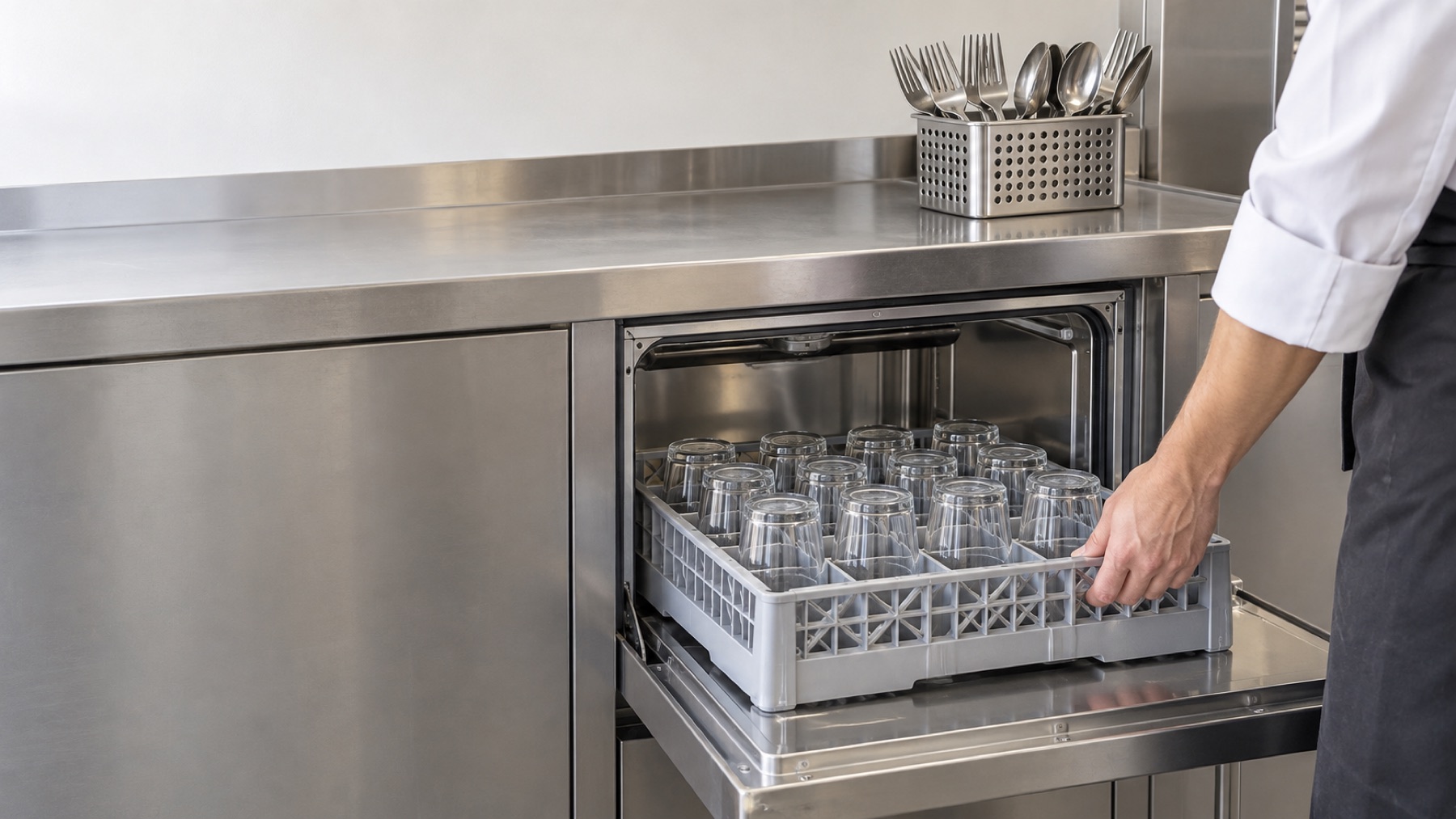
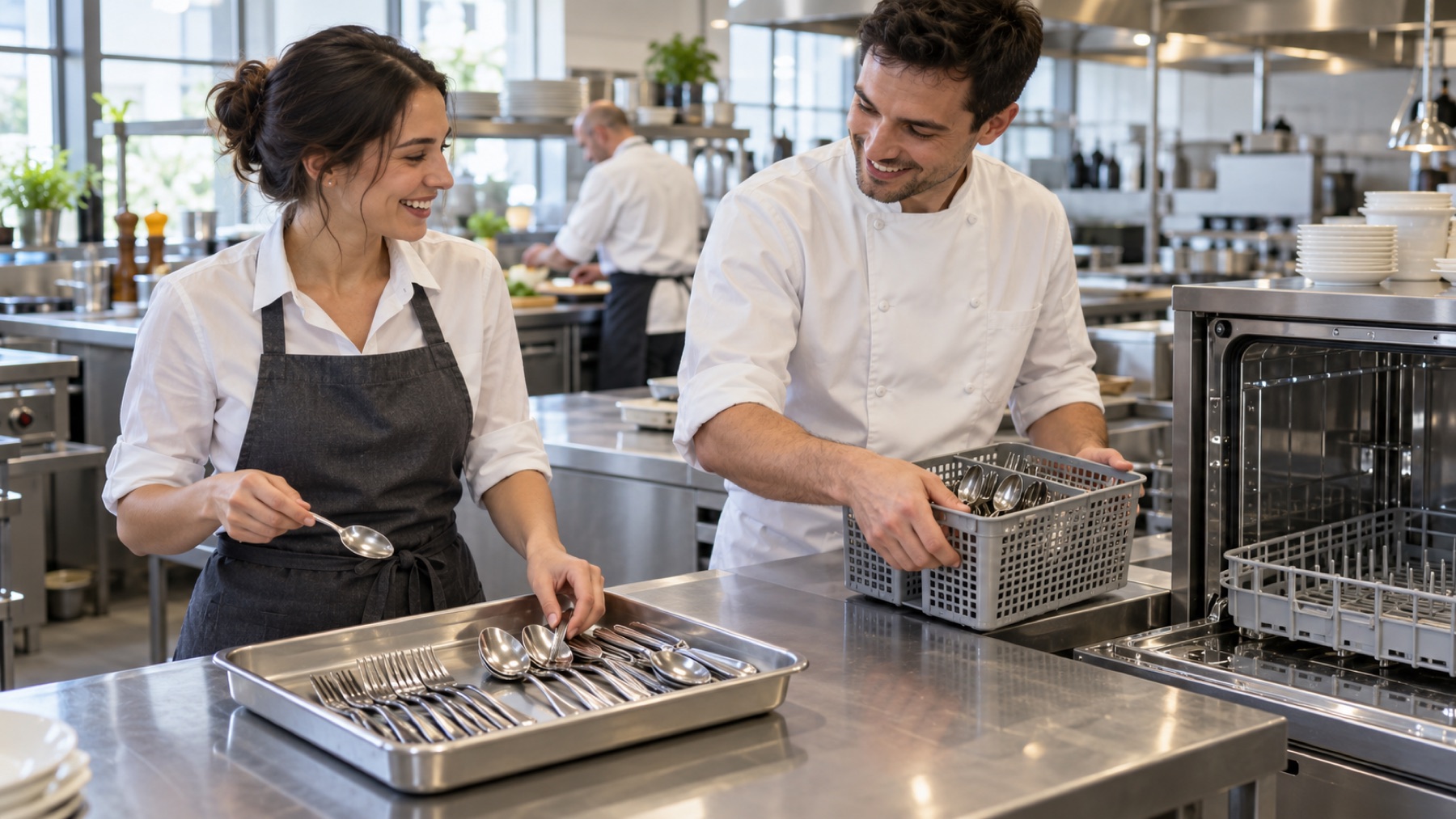
In almost every professional kitchen, someone stands at the end of the dish line polishing – because spots on flatware would otherwise end up in front of the guest. It has become so normal that hardly anyone questions it.
When everything is right, the guest sees nothing. It still cost you working hours every day – hours your team could spend on something else.
A spot on the flatware catches the guest's eye instantly. And guests judge the whole kitchen by the cutlery in their hand.
Pieces with spots go back through the machine or get reworked by hand – exactly when every minute counts during service.
Where rust takes hold, flatware gets pulled sooner. You don't notice it all at once – you see it month after month in your costs.
Two sticks in the wash rack capture rust particles before they settle on your flatware. The same principle as in over 12 million household units – now for professional kitchens, with two magnets per stick.
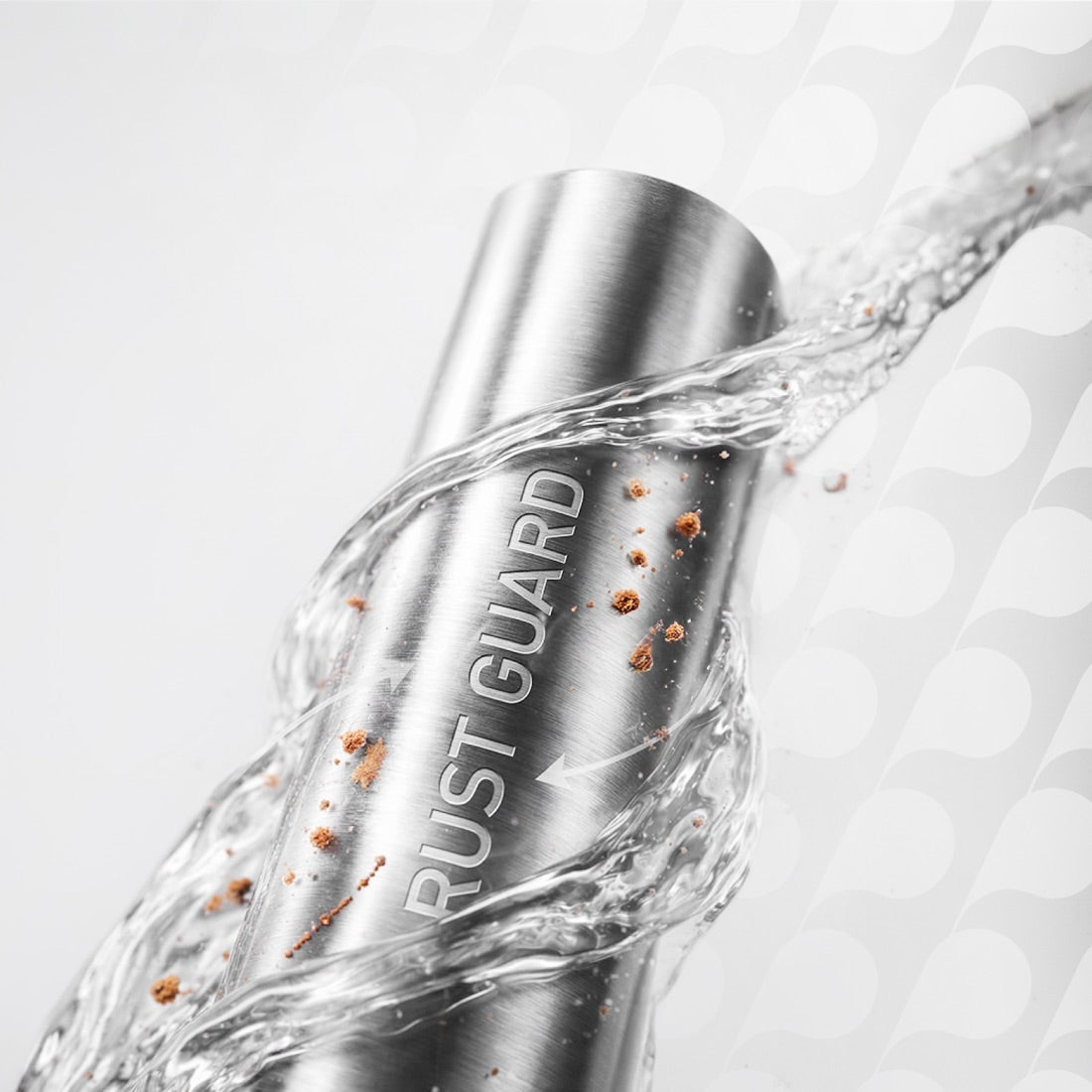
Aluminum is less noble than stainless steel. In the wash water it gives up electrons first and so protects the flatware. The same principle as the anode rod in a water heater – for the entire wash load.
Two neodymium magnets per stick attract iron-based rust particles. They stay on the sticks, not on your flatware. Dark discoloration on the sticks is normal – it shows they're working.
Cafe Hansen hasn't had to polish its flatware for 7 years. In the Iberostar test in Fuerteventura, the kitchen said its glasses were “immediately free of limescale streaks and spots”.
In the Fraunhofer comparison test, flatware with Rust Guard showed less corrosion in every single measurement. At Cafe Hansen even the stainless steel interior of the machine looked better.
No installation, no dosing unit, no training. The sticks sit loosely in the wash rack. Cycle, temperature and detergent stay exactly as they are.
Just aluminum and magnets. Food-contact safety confirmed (Fraunhofer IFAM). Used sticks are recycled.
One box per machine per month, returned with a prepaid label. Nothing to reorder, nothing to dispose of.
How strong the effect is depends on your machine and water. That's why you test it free in your own kitchen before you buy anything.
No training, no changeover. Anyone in the kitchen can do it after being shown once.
One pack of 2 sticks per machine per week. The monthly box holds 4 weekly packs.
Place both sticks in the wash rack with your flatware and dishes. Not in the tank, no mounting.
Nothing to adjust. Cycle, temperature and detergent stay the same.
After a week, take a new pack and put the old sticks in the return bag. The box goes back with a prepaid label.
Use your own numbers. The values are examples – change them until they match your kitchen.
Example calculation based on your inputs, not a guarantee. How much polishing actually goes away depends on machine, water and wash load. We check this together in the free test.
Test it free nowWe only claim what we can back up.
Field test in hotel kitchens in Fuerteventura, with up to 100 cycles per machine per day. The result from one kitchen at about 82 °C (180 °F): glasses immediately free of limescale streaks and spots.
Hood-type machine KBS Ready 515, 70–80 cycles a day in season. For 7 years: no rust spots on flatware, no polishing.
Side-by-side test with two identical dishwashers: flatware with Rust Guard showed less corrosion in every single measurement. Food-contact safety confirmed.
Rust Guard Pro is the professional version of the original, with two magnets for high wash volumes. We are testing it in hotels and restaurants and looking for more venues to join.
A free sample kit to try, no obligation and no risk. Plus personal support throughout the test.
Your honest feedback: a short quote and a few photos via a personal link. Takes under 2 minutes.
The Fraunhofer Institute IFAM confirmed the mechanism in the lab: flatware with Rust Guard showed less corrosion in every single measurement. On top of that come 7 years of field use at Cafe Hansen and the ongoing test in Fuerteventura.
No. The sticks sit loosely in the wash rack with the load. No installation, no dosing, no change to cycle or temperature.
Then you'll see it in the test, and it didn't cost you anything. The sample kit is free with no obligation to buy.
Billed per machine per month, tiered by number of machines. We quote individually – get in touch.
It depends on wash volume. We plan with one weekly pack (2 sticks) per machine and adjust it together during the pilot.
No. The sticks are made of aluminum and magnets. Food-contact safety has been confirmed (Fraunhofer IFAM).
Gray, white or dark are normal reaction products of aluminum, limescale and collected rust particles. It is not a defect – it shows the sticks are working.
They go back in the same box with a prepaid label and are recycled as pure aluminum.
First test venues report limescale-free glasses without polishing; in other kitchens we saw no change there. What is proven is the effect against rust particles on flatware and metal. Whether it helps with glasses in your machine, we check together in the free test.
Just 4 details. We'll get back to you within one business day, send your sample kit and arrange everything else with you.
Prefer email? hello@rustguardpro.com